
Company
|
|||||||
Company |
|||||||
People |
|||||
EXECUTIVES AND DIRECTORS:
Marek T. Michalewicz, PhD, Quantum-π Founder, Director and Chief Scientific Adviser
BUSINESS ADVISERS:
John Allen
SCIENTIFIC AND TECHNICAL ADVISERS:
Prof. James Gimzewski
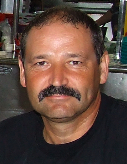 Dr Marek T. Michalewicz, Quantum-π Founder, Director and Chief Scientific Adviser
Skills: Strategic, technical, operational and day-to-day business management, experience in start-up high-tech companies, fund raising, investors relations, business planning, accounting and financial planning, software skills. Business Studies: "Business Planning for Innovative Technologies" - graduate course at the School of Finance and Management, The University of Minnesota, USA; Project Management courses (CSIRO, Australia). He received a PhD degree in physics from The Australian National University in Canberra in 1987. Until June 2000 Marek was a Principal Research Scientist at the Commonwealth Scientific and Industrial Research Organisation (CSIRO Australia). He is the inventor of the Quantum-π technology platform patent for tunnelling devices and sole inventor or coinventor of four other Quantum-π patents.
Organised three scientific meetings (two international). Edited two books on Computational Life Sciences. Author of over 30 scientific refereed papers and book chapters and more than 60 conference presentations in 13 countries .
Krish Krishnan, Corporate Development Krish has over 22 years experience in technology management and marketing with large multinationals such as Pharmacia and Novozymes A/S. As Managing Director of several regional operations, he grew complex, multiple-vertical businesses and managed them to profitability. Subsequently, he led the companyÕs marketing in global emerging markets worth over US$ 200 million. He has successfully managed product development and technical support as well as international market launches and sales forces. He has also been an entrepreneur. Krish has an MSc in Biochemistry; he then obtained an MBA from the Richard Ivey School of Business, U. Western Ontario, Canada. He is an invited Charter Member of TiE, the global entrepreneurship organisation originally begun in Silicon Valley.
Neil Duncan, Quantum-π Director, Non-Executive, Managing Director, Founder and Owner of Hydro-Chem Pty. Ltd.. His firm specialises in the water treatment of cooling towers and is responsible for nearly 90pc of the high-rise buildings in Melbourne. Hydro-Chem is now the largest water treatment company in Victoria. For more than 20 years Neil worked as a chemist, beginning in 1956 at the State Rivers and Water Supply Commission. He worked as a chemist for variety of water treatment companies where he became a senior manager for Applied Chemicals before starting his own company in 1976. John H. Allen, Business Adviser John earned B.A. (Economics) cum laude from Princeton University, NJ (1970); studied International Economics and Foreign Affairs at Johns Hopkins School of Advanced International Studies, Washington, D.C. (1971); received Certificate in Financial Administration from Fundacao Getulio Vargas, Rio de Janeiro, Brazil, and MA in Business Administration from Harvard Business School, Boston, MA, USA. He is a resident of New York City and commutes between the USA, Switzerland and Singapore. He speaks English, Spanish, Portuguese and French. His wide work experience over thirty years in banking, investment and financing include:
John's other work experience include: Assistant to Treasurer of Shell Oil Company, Houston, TX (1977) and a Member of planning department of Citibank in Santiago, Chile (1969)
Maciek E. Orczyk, Business Adviser Dr. Maciek E. Orczyk is the Founder and Managing Director of Venture Gene LLC, an entrepreneurial management and venture capital advisory firm, and former Director of Strategic Investments at Intel Capital, one of the world's largest strategic venture capital investors in the area of advanced technology. Prior to Intel Capital, Maciek served in a variety of leadership roles within Intel Corp., including co-managing the Lithography Capital Equipment Development organization responsible for strategic technology roadmaps and business aspects of bringing new generations of patterning equipment to Intel, heading the Strategic Enabling Group in charge of identifying worldwide and bringing inside Intel novel manufacturing technologies required to maintain Intel's product release cycle (a.k.a. the Moore's Law), and chairing the Investment and Collaboration Management Review Committee responsible for external technology enabling programs and business deals across Intel's manufacturing technology area.
Before joining Intel, Maciek was active in various areas of technology, including
R&D management positions at Applied Materials Corp., technology development at
an upstate New York startup developing nonlinear optical materials and systems for
optical communications, data processing and storage, and academic research and
teaching positions in the U.S. and Europe.
David E. Wynne, Business Adviser Mr. Wynne is President and CEO of Ozonator International Pte Ltd (OIPL). David has over thirty years experience in international business development, venture capital, finance and operations, in particular with start ups and small cap technology firms. He was previously Executive Director and COO for Zecotek Photonics Ltd, a leading Canadian photonics company. He recently resigned from the Board and active management to devote his attention to OIPL, but remains advisor to the Company. In 2001 he was a co-founder of MerLion Pharmaceuticals Pte Ltd, now a leading Singapore-based drug discovery company, where he held positions of COO and CBO during its formation. He has been an active partner and remains advisor to Upstream Ventures, a Singapore-based early stage venture capital firm, and previously as Senior Vice President and a Board representative of Transpac Capital, one of Asia's oldest and largest venture capital companies. He was also co-founder and investor in the Canadian software company Greenbook, which produced one of the first hypertext authoring tools for the Internet. Before entering the private sector he served as a senior diplomat for Canada in Korea, Japan and Singapore, and in APEC, as Canada's representative to the APEC Budget and Administration Committee and as the Canadian Deputy Chair of the APEC Economic Committee. During his APEC tenure, he was responsible for the organization of the Canadian Prime Minister's participation in three Leader's Meetings (Seattle, Bogor and Osaka) reporting directly to the Canadian Prime Minister's Office.
Mr. Wynne earned a Bachelor of Arts degree from Concordia University, Montreal, Canada and a Master of Arts in Public Administration & Economics from Carleton University, Ottawa, Canada. He has served on the Executive Committee of the Singapore Venture Capital Association, the Executive Council of the Singapore Biotech Association and the Executive Council of the Canadian Chamber of Commerce in Singapore.
Steve Schuster, International Marketing Advisor Steve is a Founder and CEO of Rainier Communications, Inc. of Boston, USA. He has more than 25 years of industry experience marketing and designing high-technology products especially in electronics, semiconductors and software markets. He has been the strategic and creative force behind thousands of PR and advertising campaigns for a wide variety of advanced technologies. Steve began his career designing speech recognition systems, and developing professional audio equipment for Lexicon. He received a BS in electrical engineering and an MBA, both from Northeastern University in Boston.
Prof James Gimzewski Professor of Chemistry, Department of Chemistry and Biochemistry, University of California Los Angeles. Until February 2001, he was a group leader at the IBM Zurich Research Laboratory, where he was involved in Nanoscale science since 1983. He pioneered research on electrical contacts with single atoms and molecules, light emission and molecular imaging using STM. His accomplishments include the first STM-manipulation of molecules at room temperature, the realization of molecular abucus using bucky balls, the discovery of single molecule rotors and the development of new nanomechanical sensors based on nanotechnology, which explore the ultimate limits of sensitivity and measurement. His current interests within the California Nanosystems Institute (CNSI) are in the Nanoarchitectonics of molecular systems and molecular and biomolecular machines, in particular those with quantum mechanical possibilities for information processing. Dr Gimzewski received the 1997 Feynman Prize in Nanotechnology, the 1997 The Discover Award for Emerging Fields, the 1998 ŒWired 25¹ Award from Wired magazine and the Institute of Physics "Duddell" 2001 prize and medal for his work in Nanoscale science. He is a cofounder of the Institute of Nanotechnology, UK a member of the board and chairman of its European advisory board. He holds two IBM "Outstanding Innovation Awards". Dr Gimzewski is a Fellow of the Institute of Physics and a Chartered Physicist. Currently he serves on the board of reviewing editors of Science and the editorial board of Nanotechnology, as well as the newly published Nanotechnology Opportunity Report by CMP Cientifica. Professor Gimzewski was elected Fellow to the Royal Academy of Engineering in 2001. He has joined the scientific boards of several nanotechnology companies, including Veeco-DI Instruments and the Kentucky Initiative in Nanometer Scale Science and Technology. His professional work includes board memberships to the International Advisory Committee, Nanoarchitectonics Using Suprainteractions (NASI); the Advisory Group of the International Review of Physics, UK Government; he was a member of the Advisory Group on Nanotechnology- Office of Science & Industry, Department of Trade and Industry, (DTI) UK. He also served on the board of six European research programs in Nanotechnology. Recently, Prof. Gimzewski chaired the international conference for Nanoarchitectonics Using Suprainteractions (NASI2). With over 175 papers published and more than 200 invited international talks, Professor Gimzewskis research continues to appear in journals, such as Science, and Nature. He has also appeared in many popular magazines such as Discover, The New York Times, Wall Street Journal, The Economist, The Financial Times, and Scientific American as well as having appeared on the television segment of "The Next Big Thing: Nanotechnology."
Prof. Boleslaw K. Szymanski Claire and Roland Schmitt Distinguished Professor of Computer Science Director, Center for Pervasive Computing and Networking, Rensselaer Polytechnic Institute, Troy, NY, USA He received his Ph.D. in Computer Science from National Academy of Sciences in Warsaw, Poland, in 1976. He was a post-doctoral fellow at theAberdeen University in Scotland and on the faculty of the Department of Computer and Information Sciences at University of Pennsylvania. He is anauthor and co-author of more than three hundreds scientific publications and an editor of three books. Dr. Szymanski is also an Editor-in-Chief ofScientific Programming and on the editorial boards of other journals. Dr. Szymanski is an IEEE Fellow and a member of the IEEE Computer Society, andAssociation for Computing Machinery for which he was National Lecturer. In2003, he received the Wiley Distinguished Faculty Award. Dr. Szymanskiinterests focus on sensor networks and system modeling and simulation. Hisresearch has been supported by the government and industry, includinggrants from DARPA, ONR, NSF, Cisco and IBM.
Prof. Zygmunt Rymuza Professor at the Institute of Micromechanics and Photonics, Warsaw University of Technology, Poland Leader of the microtribology and micro/nanotechnology research group. He received Ph.D. and D.Sc. in design of fine mechanisms and tribology of miniature systems at the Warsaw University of Technology in Poland. His research is focussed mainly on nanomechanics and micro/nanotribology of ultrathin films and MEMS/nanotechnology materials and miniature tribosystems embodied in mechatronic devices.He is author of the monographs "Tribology of Miniature Systems" (Elsevier Science Publishers, Amsterdam 1989) and "Tribology of Anti-Friction Polymers" (published in Polish by WNT, Warsaw 1986) and over 250 technical papers published in many international and Polish journals and presented at conferences. He is a member of the board of The Polish Tribology Society.
Prof Derek Y C Chan Personal Chair in Mathematics, Department of Mathematics and Statistics, Faculty of Science, The University of Melbourne, Australia With a background in Theoretical Physics, BSc(Hons) University of New South Wales; and Applied Mathematics, PhD Australian National University; Derek's research interest is in the modeling of material behaviour on the nanoscale with particular emphasis in colloid and surface phenomena. As Deputy Director of the Particulate Fluids Processing Centre he works in close collaborations with physical chemists and chemical engineers. He has over 140 journal publications and has given technical and conference presentations in Australia, Brazil, Canada, China, Japan, Malaysia, Singapore, UK and the US. His research interests and expertise include direct force measurements with the Atomic Force Microscopy and the Surface Force Apparatus, static and dynamic behaviour of thin films, the statistical mechanics of charged systems, the role of surface forces (van der Waals, electrical double layer and steric forces), capillary forces as well as hydrodynamic interactions on the nanoscale. He has served as Chair of the Department of Mathematics and Statistics and as Deputy Dean of Science at the University of Melbourne and on the international panel of the Swedish Research Council on a review of Theoretical Chemistry in Sweden.
Prof. Mukunda P. Das School Professor, Department of Theoretical Physics, Institute of Advanced Studies, The Australian National University, Canberra, Australia
Prof. Das has been involved in research and teaching for more than 35 years. His main research interest and speciality is in theories and applications in condensed matter and materials science. He has held numerous research and academic appointments in India, USA, Italy, Germany, Thailand, Brazil and Australia and has been awarded several academic awards and distinctions. Prof Das has edited 12 Books and Proceedings and published more than 100 papers. He is also a professional referee for more than a dozen of journals and is responsible for organising a number of National and International conferences.
Dr Andrzej Radlinski Dr Andrzej Radlinski has a PhD degree in Solid State Physics from Warsaw University. His professional career spanned the academia (Warsaw University, 1972-1983, Australian National University, 1983-1988) and government research institutions (Geoscience Australia and its predecessors, 1988-2008, Institut Francais du Petrole, 1994-1995, Cooperative Research Centre for Greenhouse Gas Technologies (CO2CRC), 2006-2008). He conducted research on an eclectic collection of subjects covering the physics of semiconductors, laser spectroscopy, physical metallurgy, economic petroleum geology, geochemistry, freezing of diesel fuel, marine fluorometry and marine remote sensing. Above all, he pioneered research on the microstructural properties of sedimentary rocks using small angle scattering of neutrons and X-rays. Over the last 15 years he led a team of a about 15 researchers from Australia, US and Europe and applied these techniques to study the hydrocarbon generation in clastic source rocks, micro-architecture of the pore space in sandstones and the relationship between the microstructure and gas sorption in coal. Since 2006 he has been conducting research on carbon capture and storage in unmineable coal seams.
Andrzej Radlinski published 96 refereed papers and reports. He is an adjunct Associate Professor at the Nanoscale Science and Technology Centre, Griffith University, Brisbane, Australia, and associate researcher at the Indiana Geological Survey, Indiana, USA. He currently resides in Warsaw, Poland.
Dr Jun Zhang Research Scientist and Project Leader, Data Storage Institute, A*STAR, Singapore
Dr Zhang was educated in China at the Lanzhou University (B.Sc. Physics) and Lanzhou Institute of Chemical Physics (M.Sc. and PhD in Chemical Physics). He has a very wide experience in academic and industrial research.
He is an Adjunct Research Professor at Tsinghua University, China.
His research expertise and current activites center on nanotriboloty of hard disks, lubricant film design, hard disk surface finishing,
thin films and coatings, surface science and precision cleaning.
Dr Anthony Sasse M.B.B.S. (Uni of Melb), F.R.A.C.P.
Dr Sasse is a Specialist Respiratory Physician accredited in Sleep Disorders. He is involved in academic research, teaching and in medical practice. He has extensive experience in intensive care. He was a Director of Intensive Care at Latrobe Regional Hospital between 1993-2000. Currently he runs a 5 bed Sleep Disorders Unit in Melbourne and Gippsland, Australia
and maintains a significant private practice in Sleep and Respiratory Medicine.
Dr Halit Eren BEng, MEng, PhD(Sheff), MBA(Curtin), MIEE, SMIEEE, CEng Senior Lecturer, Department of Electrical and Computer Engineering, Curtin University of Technology, Perth, Australia Research interests include: Instruments, instrumentation systems, industrial networks, industrial communications, field buses, sensors and transducers, intelligent instrumentation and signal processing. Author of numerous research and review articles and book chapters on sensors and metrology.
Dr Nancy Lumpkin ex-Research Fellow, Cavendish Laboratory, University of Cambridge, UK After graduation in 1983, Nancy started working for Intel where she managed the photolithography and etch production processes for the fabrication of silicon CMOS ULSI memory and ASIC devices. In 1989 she migrated to Australia and joined the CSIRO GaAs IC Facility where she developed and fabricated high electron mobility transistors (HEMTs) and HEMT-based amplifiers. In 1996 she joined the Semiconductor Nanofabrication Facility (SNF), now part of the CRC for Quantum Computer Technology, and rose to the senior position of Process Development Engineer. In 2002 Dr Lumpkin was appointed to Cambridge University as a Research Fellow. Nancy has a distinguished career with several international conference presentations and over 50 publications in international journals. She also holds the patents covering small qubit quantum computer device prototype process Dr Lumpkin brings to Quantum-π a wealth of knowledge based upon:
|